Haycock Environmental Consultants Limited
Independent Hydrologist and Waterscape Consultants
Celebrating Lancelot Brown (1716-1783)
We are pleased that the UKs national institutions built up to celebrate the 300th anniversary of Lancelot Brown in 2016. A celebrated landscape gardener and gifted soil and water engineer, with a team of surveyors and foremen, he created some of the most iconic garden landscapes in the UK. For further information on the celebrations, please go to www.capabilitybrown.org.
Over the coming months, we hope to include information in this page on the work we have done on a range of Brownian Landscapes, from Croome Landscape Park to Wrest Park.
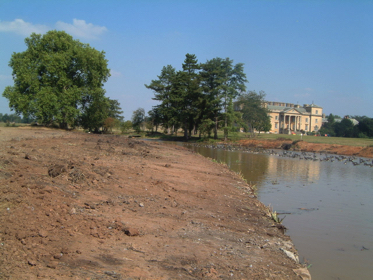
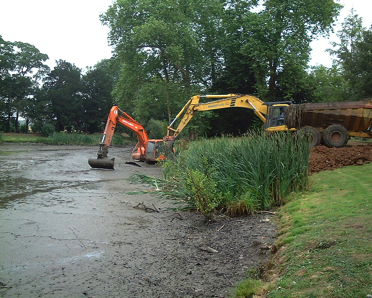
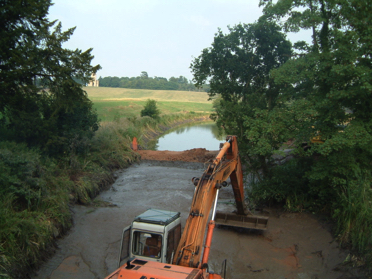
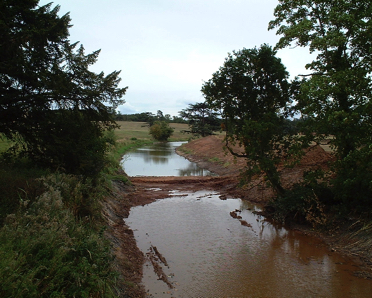
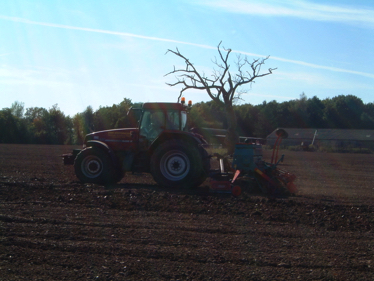
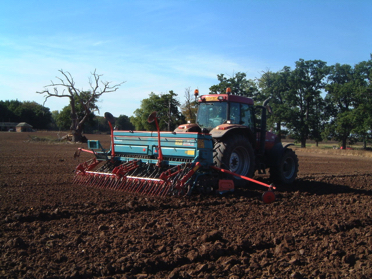
2003, dredging starts on Croome Lake
Desilting Croome River, 2003
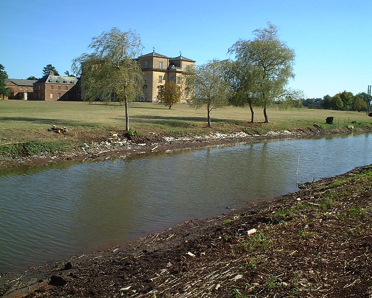
Croome River almost completed
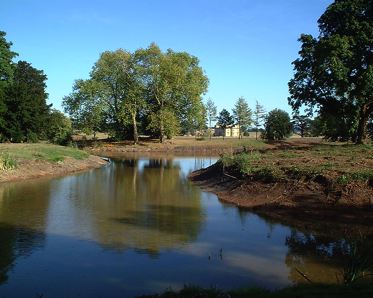
Croome River refloated with banks restored and stonework repaired.
Dredged material worked into arable land and planted to pasture
Tractor driver remembers his father ploughing up the park for WWII
Croome River refloated with banks restored the Court visible again
Croome Lake refloated with banks restored the Court visible again
Croome Landscape Park (1999-2006): Heritage Lottery Fund
In late 1999, Dr Haycock accompanied a small party of National Trust staff and visited Croome Court to assess the condition of the estate and determine whether funds could be hurriedly gathered to stop the Park from being converted into a golf course. With the assistance of Croome Estate (lead by Pip Webster), monies were secured and Croome Park entered into the National Trust portfolio of Estate in 2000.
With the support of the Heritage Lottery Fund (2002-) and the determination of National Trust staff (notably Tom Oliver) the restoration project started for one of Brown's first commissioned landscapes. Croome was a site where he had to work hard to secure enough water to create some massive water features and build his first Serpentine Water, based on the vision of the Earl of Coventry, but with a little bit of inspiration from Queen Caroline's restoration of Hyde Park Lakes in 1730 (The Serpentine). Brown had a life long relationship with the Park and worked extensively on the project from 1760-1782. Brown died at the Earl of Coventry’s London residence in 1783. Brown had a life long relationship with many estates and was constantly refining and advising estate gardeners on improvements. His summer tours around the country reviewed existing and new projects and he was a welcome guest at many houses. The advice he gave gardeners and foremen was seldom written down, mapped or drawn and we very rarely have an opportunity to see how his ideas evolved. Maps recently found at Belvoir Castle offer an insight into his depth of planning. Croome offered an opportunity to uncover the layers of changes made to the estate over 20 years as he contemplated and planned the three phases of work. Some of these phases were not completed until 1792 with the final elements of the drainage works completed by Snape (Canal Engineer) and others.
The restoration project from 2001-2005 involved restoring the water features, Croome Lake and Croome River, and ensuring enough water could be gathered to sustain these habitats from adjoining catchments. The quality of the water needed to be improved, with agricultural and motorway runoff having degraded the water over many years. Three interception wetlands were created, Lickmoor, Snape and Menagerie, to filter the water before it passed into the Croome Lake and River. The 6 hectares of new wetlands were merged into the Brownian Landscape by the project team under the leadership of Nick Haycock. Croome Lake and River was dredged in 2003 and 2005 with a total of 92 000 cubic metres of material spread onto arable land next to the lake. These fields were then laid down to conservation grassland pasture as originally intended by Brown. The hydrological and hydro-chemical restoration plan for the water features was very challenging, with inflows as little as 1 litre / second in the summer but peak inflows from the clay soils being in excess of 2000 litres per second.
The restoration of the Park is still ongoing and many of the planting plans for the Park are still being refined. The Park's visitors have grown from 25 000 in 2005 to >150 000 in 2011. Many visitors will not appreciate the state of the Park in 2000, nor the restoration effort that took place. Many will not know about the drainage and wetlands that keep the lakes clean, and that is wonderful, since we can now all focus on Croome and how Brown intended it to look.
The images below highlight stages of that journey from 2000-2006.
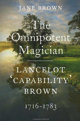
2011 Book on the works of Brown written by Jane Brown (no relation). Excellent historical review of his work and methods
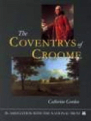

Catherine Gordon's history of the Coventry family and their ownership of Croome.
BBC2 Hidden Garden's series (January 2004) with Chris Beardshaw and Nick Haycock in 2003 before work starts. The book contains chaper on Croome.
Addington Palace, Greater London
Allerton Park, North Yorkshire
Alnwick Castle, Northumberland
Althorp, Northamptonshire
Ampthill Park, Bedfordshire
Appuldurcombe, Isle of Wight (UA)
Ashburnham Place, East Sussex
Ashridge, Hertfordshire
Aske Hall, North Yorkshire
Audley End, Essex
Aynhoe Park, Northamptonshire
Backs, The, Cambridge, Cambridgeshire
Badminton, South Gloucestershire (UA)
Basildon Park, West Berkshire (UA)
Belhus Park, Thurrock (UA)
Belvoir Castle, Rutland (UA)
Benham Park, West Berkshire (UA)
Berrington Hall, Herefordshire (UA)
Blenheim Palace, Oxfordshire
Bowood, Wiltshire
Brightling Park, East Sussex
Broadlands, Hampshire
Brocklesby Park, Lincolnshire
Burghley House, Peterborough (UA)
Burton Constable, East Riding of Yorkshire (UA)
Burton Pynsent, Somerset
Cadland House, Hampshire
Cardiff Castle & Bute Park, Cardiff (UA)
Castle Ashby, Northamptonshire
Caversham Park, Reading (UA)
Charlecote Park, Warwickshire
Chatsworth, Derbyshire
Chevening Park, Kent
Chilham Castle, Kent
Chillington, Staffordshire
Clandon, Surrey
Claremont, Surrey
Cliveden, Buckinghamshire
Combe Abbey, Warwickshire
Compton Verney, Warwickshire
Copped Hall, Essex
Corsham Court, Wiltshire
Cowdray House, West Sussex
Crewe Hall, Cheshire
Croome Court, Worcestershire
Danson Park, Greater London
DenhamPlace, Buckinghamshire
Ditchingham Hall, Norfolk
Ditton Park, Windsor & Maidenhead (UA)
Doddington Park, Cheshire
Dodington House, South Gloucestershire (UA)
Eaton Hall, Eccleston, Cheshire
Edgbaston Hall, West Midlands
Elvaston Castle, Derbyshire
Euston Park, Suffolk
Eywood, Herefordshire (UA)
Fawley Court and Temple Island, Buckinghamshire
Fawsley, Northamptonshire
Foots Cray Place, Greater London
Garrick's Villa, Greater London
Gayhurst Court, Milton Keynes (UA)
Grimsthorpe Castle, Lincolnshire
Hainton Hall, Lincolnshire
Hampton Court, Greater London
Harewood House, West Yorkshire
Harleyford, Buckinghamshire
Heveningham Park and Gardens, Suffolk
Highclere Park, Hampshire
Hinton Manor, Oxfordshire
Holkham Hall, Norfolk
Hoo, The, Kimpton, Hertfordshire
Howsham Hall, Malton, North Yorkshire
Ickworth Park, Suffolk
Kelston Park, Bath and North East Somerset (UA)
Kiddington Hall, Oxfordshire
Kimberley Hall, Norfolk
Kings Weston, Bristol (UA)
Kirkharle Hall, Northumberland
Kirtlington Park, Oxfordshire
Knowsley Hall, Merseyside
Langley Park, South Bucks, Buckinghamshire
Langley Park, South Norfolk, Norfolk
Latimer Park, Buckinghamshire
Longford Castle, Wiltshire
Longleat, Wiltshire
Lower Gatton Park, Reigate, Surrey
Lowther Castle, Cumbria
Luton Hoo, Bedfordshire
Madingley Hall, Cambridgeshire
Mamhead, Devon
Melton Constable Hall, Norfolk
Milton Abbey, Dorset
Moccas Court, Herefordshire (UA)
Moor Park, Rickmansworth, Hertfordshire
Newnham Paddox, Warwickshire
Newton Park, Bath and North East Somerset (UA)
Nuneham Courtenay, Oxfordshire
Oakley Park, Shropshire
Packington Hall, Warwickshire
Panshanger, Hertfordshire
Patshull Hall, Staffordshire
Petworth House, West Sussex
Pishiobury, Hertfordshire
Prior Park, Bath and North East Somerset (UA)
Pull Court, Bushley, Worcestershire
Ragley Hall, Warwickshire
Ripley Castle, North Yorkshire
Rise Hall, Hornsea, East Riding of Yorkshire (UA)
Royal Botanic Gardens, Kew, Greater London
Sandbeck Park and Roche Abbey, South Yorkshire
Sandleford Priory (St Gabriel's School), West Berkshire (UA)
Scampston Hall, North Yorkshire
Sheffield Park, East Sussex
Sherborne Castle, Dorset
Shortgrove Park, Essex
Sledmere House, East Riding of Yorkshire (UA)
Southill Park, Bedfordshire
Springhill House, Worcestershire
St John's College, Cambridge, Cambridgeshire
Stansted Park, West Sussex
Stapleford Hall, Leicestershire
Stoke Park, Slough, Buckinghamshire
Stowe, Buckinghamshire
Syon Park, Greater London
Talacre, Gwespyr, Denbighshire (UA)
Temple Newsham, West Yorkshire
Thoresby Park, Nottinghamshire
Thorndon Park, Essex
Tottenham Park, Wiltshire
Trentham, Staffordshire
Ugbrooke Park, Devon
Valence, Westerham, Kent
Wallington, Northumberland
Wardour Castle, Wiltshire
Warwick Castle, Warwickshire
Weston Park, Staffordshire
Wilton, Wiltshire
Wimbledon Park, Greater London
Wimpole Hall, Cambridgeshire
Woodchester Park, Gloucestershire
Woodsome Hall, Huddersfield, West Yorkshire
Wotton Underwood, Buckinghamshire
Wrest Park, Bedfordshire
Wrotham Park, Hertfordshire
Wycombe Abbey, Buckinghamshire
Wynnstay, Wrexham (UA)
Youngsbury, Hertfordshire
Parks associated with Lancelot Brown (1716-1783)

When I last looked, there were 147 Parks and Gardens with Brown associations. This list will be refined with the tercentenary. For example, Allerton Park, which we are currently working on the restoration plan (2011-2014), does not seem to have any association with Brown and the landscape appears to be Switzer and linked to his work at Bramham Park in the period 1720-1730.
Items in Bold have been reviewed by Haycock from 1996-

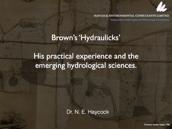
Celebrating "Lancelot Brown": In May 2016, English Heritage hosted a major conference on the achievements of Lancelot Brown, to celebrate 300 years since his birth. Dr Haycock presentation is accessible by following this link.
Water in view: the genius of Capability Brown: Tim Richardson, 20th August 2016, The Telegraph
An article with John Phibbs, Steffie Sheilds and Nick Haycock.